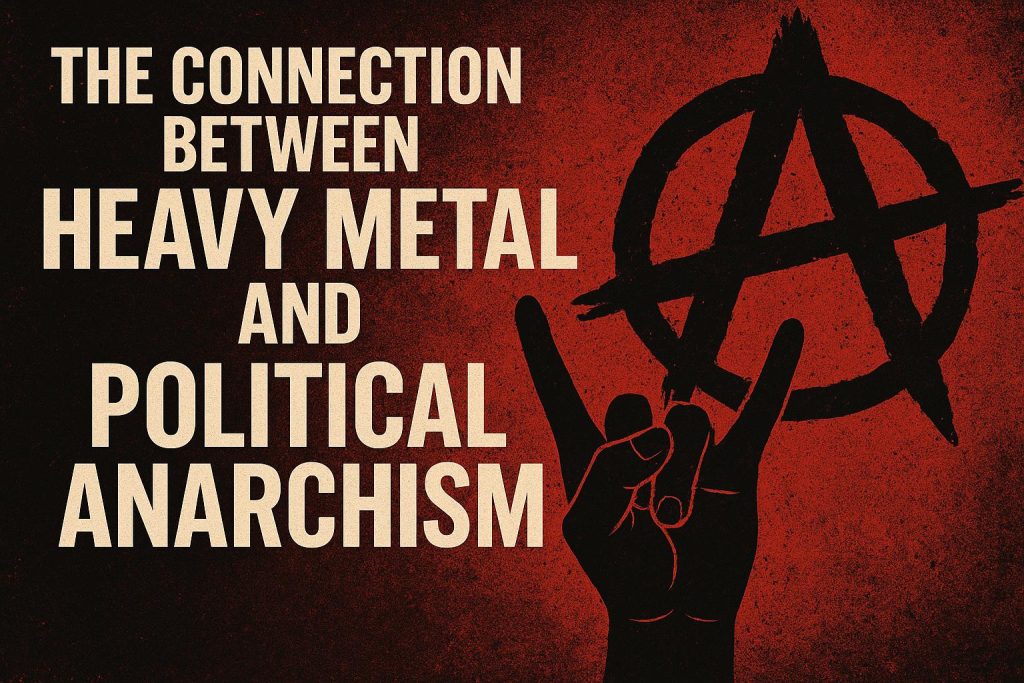
The Connection Between Heavy Metal and Political Anarchism
Introduction
Throughout its history, heavy metal music has been known for its intense sound, rebellious themes, and countercultural message. An interesting aspect of this genre is its potential connection to political anarchism. While not all heavy metal bands or fans subscribe to anarchist ideology, there are notable intersections between the two.
Origins of Heavy Metal
Heavy metal originated in the late 1960s and early 1970s, primarily in the United Kingdom and the United States. Bands like Black Sabbath and Led Zeppelin played a significant role in shaping its sound. Known for its amplified distortion, extended guitar solos, and emphatic beats, heavy metal quickly distinguished itself from mainstream rock music.
The roots of heavy metal lie in the experimentation and creativity during that era, where musicians began to push the boundaries of rock and roll. The distinctive sound was partly the result of technological advancements, such as more powerful amplifiers and effects pedals, allowing musicians to create a heavier and more aggressive sound. This approach attracted a following that was eager for a sound that conveyed a depth of feeling and intensity not found in pop tunes of the day.
The Ideological Underpinnings
Heavy metal often explores themes of rebellion, freedom, and anti-establishment sentiments. These themes resonate with certain principles of political anarchism, which advocates for a society free from governmental authority and hierarchies. While heavy metal is not inherently anarchist, its lyricism and imagery frequently question authoritative structures.
The confrontation with authority manifested in the music and themes seen in heavy metal is comparable to the ethos of anarchism, even if it doesn’t always align perfectly with anarchist doctrine. The lyrics of many heavy metal songs often question societal norms, criticize state brutality, or challenge religious orthodoxy and other institutional forms of authority, prompting listeners to think critically about the world around them.
Notable Bands and Examples
Certain heavy metal bands have been known for explicitly embracing anarchist ideals. Bands like Crass and Napalm Death have incorporated anarchistic themes into their music and public personas. These bands often raise issues related to social justice, human rights, and anti-war sentiments, using their platform to challenge the status quo.
These bands often illustrate a willingness to confront and address difficult and often controversial subjects through their music. This form of artistry serves a dual purpose: entertaining audiences while also provoking thought and dialogue among listeners about core societal issues. As they weave complex themes into their musical narratives, the bands contribute to the broader socio-political discourse.
Heavy metal bands, even those that do not overtly claim an anarchist label, often provide powerful critiques of societal issues through their music. By engaging with themes of personal autonomy, defiance against institutional control, and the pursuit of individual freedoms, these musicians contribute to a broader psychological climate that aligns with elements of anarchist thinking.
Heavy Metal Festivals and Political Discourse
Heavy metal festivals sometimes serve as a ground for political discourse, providing a space for bands and fans to express their views openly. These events can foster a sense of community around shared ideals, including those aligned with anarchistic principles. The collaborative environment at these festivals often encourages dialogue on political and social issues.
Festivals serve as melting pots for cultural and ideological exchanges, enabling attendees to connect through shared experiences and discussions beyond the music itself. The atmosphere encourages an open-minded exploration of ideas, allowing for the celebration of diversity within the heavy metal community while also respecting individual beliefs and ideologies.
Moreover, these festivals often act as safe havens for freedom of expression where diverse perspectives can be encountered and appreciated. It is here that music transcends mere performance and becomes a sort of participatory art that invites discussion, engagement, and the communal pursuit of radical ideas and mutual respect.
Challenges and Criticisms
Despite the overlap between heavy metal and anarchism, this connection is not without its criticisms. Some argue that the commercialization of heavy metal contradicts anarchist beliefs. Others note that just because heavy metal explores anti-establishment themes, it does not mean all artists or fans advocate for anarchism.
The sprawling industry surrounding heavy metal music, from concert ticket sales to merchandise, sometimes sits in stark contrast to the anti-commercial and anti-establishment messages espoused by the genre. Critics argue that the pursuit of profit can dilute the authenticity of the anarchistic elements within the music. There is also the argument that when bands become mainstream, their messages might lose their original edge or provocativeness meant to challenge authority or question societal norms.
Heavy metal fans themselves present a diverse spectrum of beliefs and values, ranging from staunch anarchists to individuals who simply enjoy the style and themes of the music without subscribing to anarchistic ideologies. Thus, while the music and its themes might suggest a certain worldview, the actual engagement and beliefs of its listeners can differ significantly.
Conclusion
The relationship between heavy metal and political anarchism is complex and multifaceted. While heavy metal often embodies a defiant attitude against authority, not all of its artists and fans identify with anarchist principles. Nevertheless, the genre’s capacity to critique societal structures continues to make it a notable cultural force.
Heavy metal music serves as a cultural conduit allowing expressions of resistance and the questioning of conventional societal roles. The presence of anarchist themes in heavy metal does not demand adherence to political anarchism from its listeners but invites them to engage with alternative perspectives regarding power, authority, and autonomy.
For further exploration of the cultural implications of heavy metal and its connections to various political ideologies, readers may find resources from music history and political science journals beneficial. These resources can provide more detailed insights and discussions regarding the continuing influence of heavy metal on society and its relation to political and social discourses.