How the Internet Changed Heavy Metal Distribution
The Pre-Internet Era of Heavy Metal Distribution
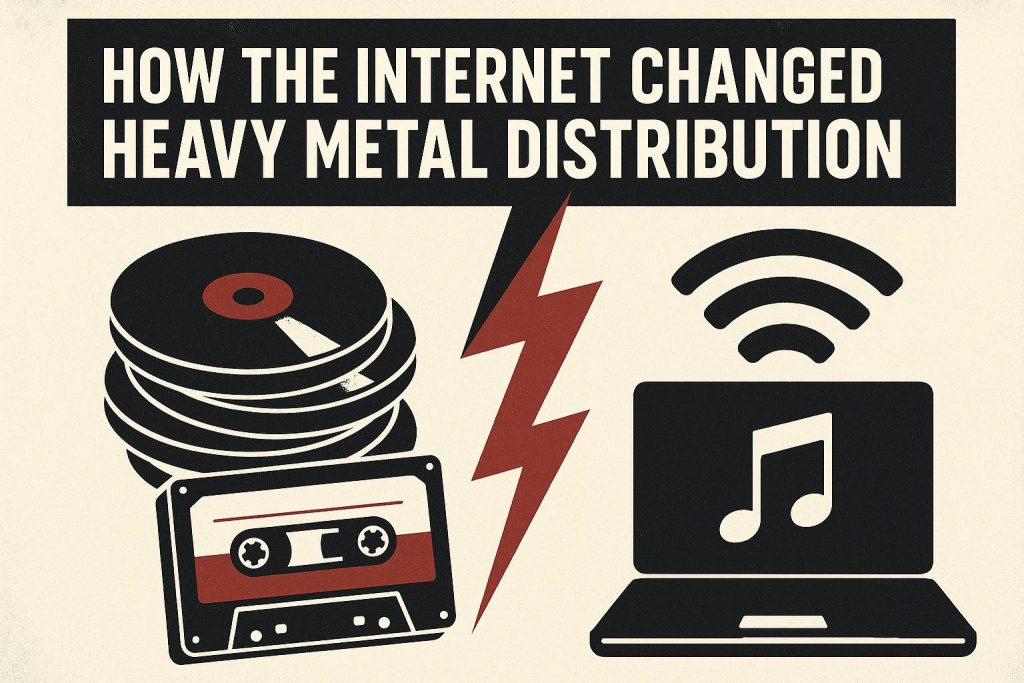
Before the internet radically changed the way music was shared and consumed across the world, the heavy metal genre, like many others, had to rely predominantly on physical media for distribution. This era was marked by an intricate and often financially demanding landscape dominated by vinyl records, cassette tapes, and later compact discs (CDs).
Role of Record Labels: Record labels were pivotal during this time, not just in heavy metal but across the music industry. These labels played a multi-faceted role encompassing the production, promotion, and distribution of music. Bands aspiring to reach audiences often found themselves reliant on securing a deal with a label. Doing so granted them essential resources such as access to professional recording studios, comprehensive marketing campaigns, and well-established distribution channels. Without a label, independent bands faced a tough battle to gain widespread recognition.
Distribution and Retail: When it came to the physical distribution of music, the process involved an entire ecosystem centered around getting music into brick-and-mortar record stores scattered across cities and towns. This was a time-intensive and costly endeavor, requiring the coordination of numerous logistical facets including manufacturing, packaging, and transportation. The ultimate goal was to achieve shelf space in these stores, where eager fans might discover an album by chance or due to recommendations.
Discovering New Music: In this pre-digital age, discovering new heavy metal bands was a communal experience. Friends and acquaintances would share knowledge primarily through word of mouth. Dedicated print magazines served as vital resources for band reviews, interviews, and scene updates. Radio stations specializing in heavy metal also played a critical role in bringing new music to listeners’ attention. Furthermore, attending live performances provided fans firsthand exposure to emerging artists, while underground scenes and tape trading networks offered avenues for experiencing non-mainstream metal sounds.
The Emergence of the Digital Age
With the turn of the century, the digital revolution was full-fledged, laying the groundwork for the most significant transformation in music distribution. The internet emerged as a powerful tool and changed the way music was distributed globally. This era allowed bands new possibilities to connect with audiences, bypassing the conventional gatekeepers that once dominated the landscape.
Online Distribution Platforms: As the internet gained traction, bands could leverage digital distribution platforms to reach listeners directly. This democratization of distribution meant that bands no longer needed to rely solely on record labels for exposure. They could present their music to a worldwide audience with considerably reduced costs, opening doors for many independent artists.
The Role of Napster and Peer-to-Peer Sharing
The advent of Napster, along with other peer-to-peer (P2P) file-sharing services, signaled a paradigm shift in music distribution. Though these platforms attracted controversy mainly due to copyright infringement issues, they had an undeniable impact on how fans interacted with music. For the heavy metal community, this era represented an unprecedented exchange of music, allowing for both exploration and sharing. Fans could access an extensive variety of metal subgenres, including international acts that were previously hard to find due to geographic and logistical barriers.
Global Reach: Heavy metal bands benefited from Napster’s reach as they could suddenly reach audiences on a truly global scale. The ability for fans to share music directly resulted in the discovery and appreciation of bands they might never have encountered through traditional media.
The Rise of Online Music Platforms
Upon the decline of P2P networks, catalyzed by a wave of legal challenges, legitimate online music platforms emerged and subsequently redefined the music consumption landscape. Services such as Apple’s iTunes and the innovation of Spotify played a transformative role. These platforms introduced streaming services that democratized music access.
Streaming’s Impact: Streaming offered heavy metal bands, regardless of their stature in the industry, the opportunity to distribute music to a global audience. Crucially, these platforms allowed for seamless discovery, where fans could explore both up-and-coming artists and established acts within the same digital space. The relatively low upfront cost for distribution on such platforms enabled more bands to share their music broadly.
Empowering Independence: Sites like Bandcamp rose to prominence by providing independent artists a platform to sell their music directly to fans, fostering more sustainable revenue models compared to traditional distribution. This innovation marked a shift towards empowering artists, giving them control over how their music was presented and sold.
The Impact of Social Media
The proliferation of social media became another influential factor in changing how heavy metal bands distribute music and engage with fans. Platforms such as Facebook, Instagram, and YouTube have become indispensable tools for promotion and interaction.
Direct Band-Fan Interaction: Social media has allowed bands to maintain direct lines of communication with their audience. This interaction allows them to quickly update fans on new music releases, tour announcements, and general news. It further fosters community by creating spaces where fans can interact with each other and the artists themselves.
Viral Marketing and Community Engagement: Heavy metal bands can use social media for viral marketing, where fans often share content within their expansive online networks. This organic sharing style can potentially introduce bands to a wider demographic than traditional advertising methods ever could. By establishing a closer connection with their audience, bands cultivate highly engaged and supportive communities.
In closing, the internet’s impact on heavy metal distribution emphasizes reducing entry barriers for new artists and offering fans unparalleled access to a diversity of music. Even as this landscape continually evolves, the synergy between technology and music consistently presents new challenges and opportunities for the community. As we move forward, it remains clear that the distribution terrain will adapt, continuing to shape the journey of heavy metal and its followers.