The Debate Over Metal’s Mainstream vs. Underground Status
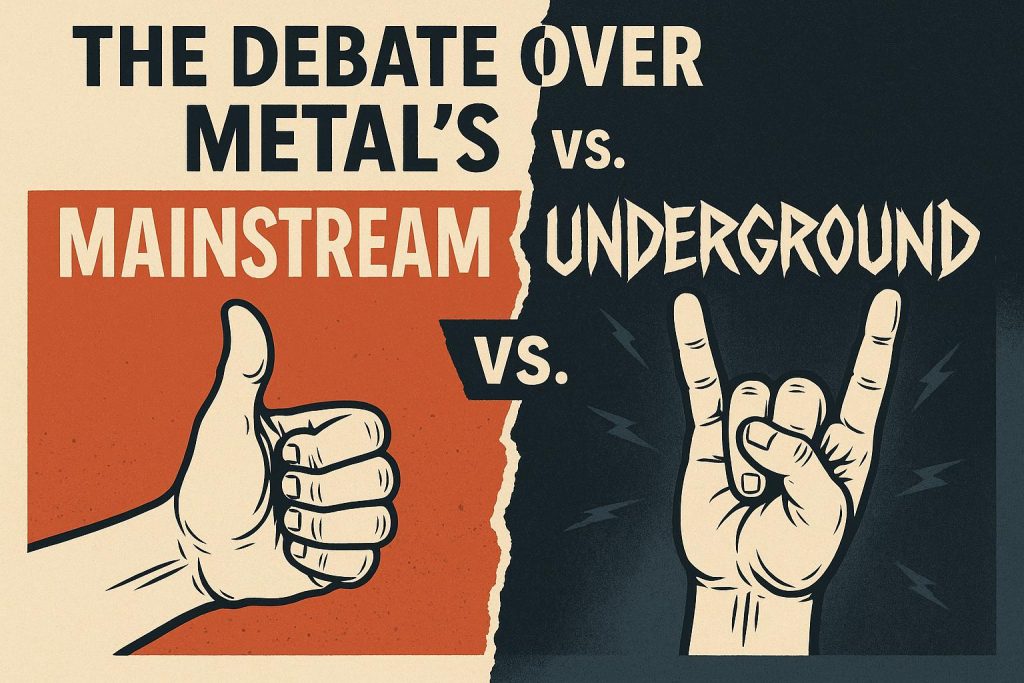
The Origins of Metal’s Mainstream vs. Underground Debate
The ongoing discussion regarding metal music’s position as either mainstream or underground has been active since the genre’s inception. Emerging in the late 1960s and early 1970s, metal music was birthed from a blend of influences including hard rock, blues, and psychedelic rock. As pivotal bands like Black Sabbath and Led Zeppelin began to gain notoriety, they brought metal into the public eye, setting the foundation for the genre’s eventual widespread reach.
As we trace its development into the 1980s, metal witnessed a remarkable surge in visibility due to the rise of influential bands like Metallica, Iron Maiden, and Guns N’ Roses. The notable commercial success of these groups sparked a consequential debate among fans and musicians regarding questions of the genre’s purity and authenticity. This debate would continue to play a central role in shaping metal’s evolution.
Defining Mainstream and Underground
Understanding the dichotomy of mainstream versus underground is essential in comprehending the nuances of this debate. The mainstream encompasses music that enjoys widespread popularity and commercial triumph. Mainstream metal bands frequently benefit from extensive radio play, high album sales, and the ability to perform in large venues. Illustrative examples of mainstream metal bands include Metallica and Iron Maiden, whose music has transcended traditional metal circles, reaching a more diverse audience.
Conversely, the underground refers to music that thrives outside the main focus of the commercial music industry. This sphere typically involves lesser-known bands that command a devoted but smaller following. Underground metal is often characterized by its raw, innovative sounds and is celebrated within specific niche communities. Essential bands like Mayhem and Bathory are regarded as foundational pillars of the underground metal scene, revered for their influence and their commitment to the genre’s original ethos.
Factors Influencing Metal’s Mainstream Appeal
Several factors have contributed to the growing mainstream appeal of metal music. The advent of superior production technologies has allowed for more polished recordings, making the genre more palatable to wider audiences. Additionally, platforms like YouTube and various streaming services have revolutionized the way audiences discover music, enabling metal bands to reach listeners far beyond their immediate geographical locations.
Collaborations between metal musicians and artists from other genres have also played a significant role in introducing metal to new audiences. By blending different musical styles, these collaborations broaden the appeal of metal, attracting listeners who might not have otherwise engaged with the genre.
Moreover, major metal festivals such as the Download Festival and Wacken Open Air significantly contribute to exposing metal bands to substantial audiences. These large-scale events are known for their diverse lineups, mixing well-established acts with emerging bands. This amalgamation not only facilitates cross-genre appreciation but also helps solidify the genre’s place within the broader music industry.
The Underground Metal Movement
Despite metal’s increasing mainstream appeal, the underground metal scene remains vibrant and continues to thrive, largely due to the dedication of fans and artists who are committed to preserving the genre’s core principles. A defining characteristic of this scene is the emphasis on DIY ethics, where bands often choose to take on self-releasing and self-recording of their music. This approach ambitiously nurtures innovation and grants artists the freedom to explore subgenres such as black metal, death metal, and doom metal.
Within the underground scene, live performances typically occur in smaller, more intimate venues. This fosters a tightly-knit, community-driven atmosphere where fans and artists can closely interact and share their passion for metal. In this environment, the traditional pressures associated with commercial success are notably absent, allowing the music to remain genuine and unfiltered.
The Ongoing Debate
Central to the discourse around metal’s status between mainstream and underground is the conversation about authenticity and identity. Critics of mainstream success often argue that such exposure can dilute the genre’s intrinsic essence, either by altering its distinctive sound to cater to a broader audience or by fostering an environment where commercial motives overshadow artistic innovation. On the other hand, proponents of metal’s widespread popularity assert that this visibility is crucial for the genre’s longevity, evolution, and ability to reach new fans.
The fact that metal possesses the unique ability to exist concurrently in both mainstream and underground realms serves as a testament to its versatility and resilience. Both facets play instrumental roles in creating a dynamic landscape for the genre, introducing fresh participants to its varied styles while also preserving its rich heritage. This dual existence ensures that metal not only stays relevant but continues to evolve and adapt in an ever-changing musical world.
For those interested in exploring how metal continues to evolve within both contexts, dedicated resources, music festivals, and label websites offer further insights into the intricacies of mainstream and underground metal. While straddling the lines of commercial success and underground authenticity, metal music remains a vital and influential player within the global cultural tapestry.